The EU has Sewn Up the IMF Race Already? …. plus some media

christine-lagarde-imf-600

I published an op-ed in the Korea Times last week on the IMF managing director (MD) race. For readers outside of Korea, the KT is a mid-level paper here in Korea, sort of like the Plain Dealer from my hometown Cleveland. The biggest paper in Korea’s landscape is the conservative Chosun Ilbo. The KT is smaller, and because it is written only in English, it has a substantial foreign readership beyond Korea. My op-ed is based on this post last week.

I am amazed at how quickly the replacement for Dominique Strauss-Kahn (DSK) is emerging as a European once again  – the French Finance Minister, Christine Lagarde (above). The Europeans seem to be moving lightning fast on this, before Asians or developing states can get their act together and congeal around one or two non-European alternatives. As I noted in the op-ed, there is no functional reason for the IMF MD to be a European. It has simply been precedent, justifiable so long as Europe was the second major pole in the global economy with the US. Well now there is a third, in East Asia, what Barnett calls the ‘New Core’ (the North Atlantic being the Old Core). Surely it’s time to give the new Core a shot at running one of the big international economic organizations of the world?

The EU has driven its economy into a ditch in the last few years, so I see no ‘competence’ reason why a European finance minister would be better than a Japanese or Singaporean banker, e.g. Nor have the last three European MDs of the IMF been very good. Horst Koehler (2000-04) and Rodriego de Rato (2004-07) were placeholding non-leaders who took the MD-ship in order to springboard into higher office back home. And of course, DSK just globally embarrassed the institution in a manner that basically epitomizes its critics’ worst fears. The narrative of a powerful wealthy white man assaulting an black immigrant female maid is straight out of the antiglobalization movement’s nightmare imagery. So there is no particularly history of ‘quality leadership’ from the EU to justify its sinecure either. In fact, quite given how bad the last three MDs in a row have been, it would be a good idea to drop the EU for a round or two.

So where is substance to the argument that somehow Europeans are somehow entitled to the MD-ship? There is none. It’s bogus. The real claim is tribal – the EU wants the position, because it bolsters Europe’s otherwise declining claim to global leadership and relevance. The EU is like a child running around the adult table waving its hands demanding attention. As Martin Wolf noted on this issue, if the IMF can’t change to accept new realities (the rise of  the rest, especially Asia and the BRICS), then unfairly excluded states will simply walk away from the institution. Asia has already flirted with this because it felt so high-handedly treated in the Asian Financial Crisis (AFC).

Finally, the argument that the IMF should have a European leader right now because the IMF will be working so much in Europe in the near-future, is so specious as to be nearly racist. I find this almost revolting. Back when the AFC hit (1997-98) and westerners were dispensing painful but necessary advice to Asia, no one in the West worried about white bankers dispensing hard medicine to Asians. To say, today, that German Chancellor Angela Merkel won’t trust anyone to run the IMF unless it’s a European she knows,  is so ridiculous, hypocritical, self-serving, and borderline racist, that it really should shock the non-western IMF members into some pretty harsh language in response. If the EU wants to run its economy over a cliff, that’s its own choice. But the EU has no special claim to line up the globe’s resources (through the IMF) to bail out foolish German bondholders badly exposed in Greece, Spain and Ireland. For a counter-example, ask if California, with its own nasty budget crunch, is getting a bail-out from the IMF? No; Americans will wrestle through that on their own, and the EU should too on Greece and the other euro-miscreants.

I find the sheer, bald-faced selfishness and parochialism of this just shocking, especially given how often the EU preens about the importance of multilateralism and international institutions, in obvious contradistinction to ‘mercantilist’ Asians and ‘cowboy unilateralist’ Americans. So here is a golden chance for the EU to really improve global governance, to make it fairer and more democratic. But no, they’d rather insist on tribal privileges. Bleh.

Does it need to be restated that the IMF is a global institution, not a European regional one? The IMF does have other lending responsibilities, and most of its non-European borrowers are vastly poorer than Greece or Ireland. The EU has huge resources compared to the many LDCs (less developed countries) of Africa, but I guess the IMF is really supposed to be a global slush fund for the euro mess.

As best I can tell, Lagarde is pretty competent, and may do a good job. I certainly hope so, and her first trip as MD should be to non-European borrowers, especially in Africa, to prove her credibility. But there is no substantive argument from her resume to set her apart. Try here and here for a nice run-down of all the good non-western candidates who won’t be considered, because Merkel couldn’t care less about global governance and multilateralism when her campaign contributors’ South European bond-holdings are about to be ‘hair cut.’ It’s all just tribalism and selfishness. The real European claim is narcissism – put off succumbing to the new global reality where Asian economies are easily as influential as the old Core’s.

Read this and this as well on this issue.

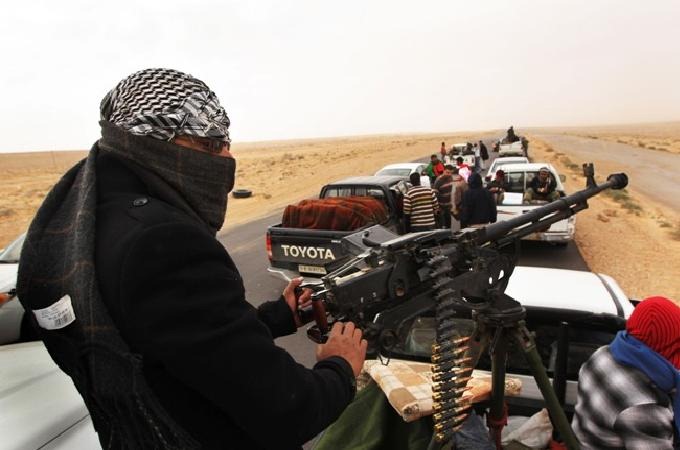
Does it Make Humanitarian Sense to Let Libyans Fight it Out Alone?

libya-war

Regular readers know that I supported the Libyan intervention primarily on humanitarian grounds. For my writing on Libya, please try here and here. My big concern was that the fall of Benghazi might initiate a massacre like Srebrenica. If a limited intervention could forestall that, I think it was justifiable. To critics who said this was duplicitous, because we did not intervene in Ivory Coast or Syria, my response was that Libya moved first (its problems were presented earlier), which matters in a world of scarce resources with limited knowledge of the future. Also, Libya was proximate to NATO making it that much easier and so more morally compelling. This is hardly an air-tight case; Libyan lives are no more ontologically valuable than Syrian or Ivorian. But there are limits to what outsiders can do; and I thought Libya pretty well met the nexus of limited western capabilities – badly restricted by American military overstretch and degraded European militaries – and the clear humanitarian imperative raised when Gaddafi and sons started ranting about ‘rivers of blood’ and ‘hunting the rebels like rats, alley by alley.’ Non-interventionists retort that a massacre was not actually likely, but I disagree with that assessment.

A much stronger argument raised by non-interventionists directly challenges the humanitarian rationale. This argues that civil wars that stalemate, as Libya’s has now, actually produce more death and destruction over time than quick, definitive endings. I don’t have any particularly good cite on this, but generally I find that Max Hastings at the Financial Times, Stephen Walt at Foreign Policy, and various authors at the National Interest have leaned in this direction on Libya. In passing, I should say that I find all these authors to raise excellent points. Their analysis is worth your time and vastly more professional and serious than the partisan and uniformed commentary coming from Congress and the GOP presidential field. If you want to know why Libya is a mistake, read Walt or Hastings; don’t waste your time with FoxNews or Newt Gingrich.

So if the Libyan civil war drags on for years, with hundreds of thousands killed, does that mean it would have been better for Gaddafi to win early, and ‘only’ kill ten thousand? This strikes me as quite strong (and humane, albeit macabre) logic. Here are three possible responses:

1. Any comparative body counts (yes, it is that ghoulish to say so, but this is what murderous thugs force on us) must account for all the violence Gaddafi would also inflict on Libyans in the wake of his victory and restoration of the old order. In other words, it is not enough to say that Gaddafi would kill fewer than the civil war would, therefore his victory is better, because Gaddafi would end up killing many more in the future, presumably, in order to re-bolster his police state. These future murders and persecutions must be included with the casualties of a Benghazi massacre on the interventionist side of the ledger.

2. At the time of intervention (mid-March), it was not possible to seriously predict that the civil war would drag on. Indeed, even now, no one really knows how long this will go. Gaddafi could fold at any time; defections keep happening; the rebels do seem to be, slowly, clawing back. Even Walt agrees that Gaddafi is probably on his way out. This lowers the probability of a much higher body count from a civil war, because we don’t really know how long it will, in fact, last. On the hand, the probability was pretty high that a Gaddafi victory in Benghazi would lead to a massacre.

In the end, the only way to definitively know is post-hoc, which means we must estimate at the pre-hoc time of decision. We can only say if the intervention was humanitarianly beneficial after the war ends. If it does take 5 years and 250,000 dead, we will then look back in 5 years and concur that it was an error. If it ends next week, we won’t. By way of example, look at our thinking on Iraq 2. In 2003, the Bush people promised a blitzkreig like Desert Storm. We were to be liberators with a quick ‘mission accomplished’ and home by Christmas. Like many, I (foolishly) believed this narrative also and supported the Iraq War. In retrospect, this was a terrible error for which I feel ashamed and for which students regularly criticize me, but I (and many others) only knew that clearly by, say, 2005/06. (How Bush can still say he would do it all over again is just beyond me.)

Like so many, I thought the Bush people had actually planned something for Iraq after the victory, especially given that it was a war of choice with lots of time to plan and think. And indeed, if Iraq 2 had gone as Iraq 1, Bush 2 would be hailed as one of America’s great presidents. Unfortunately, decisions can’t be made with full information at the time, and looming massacre in Benghazi forced a rapid decision on Obama. This is the real distinction between Obama’s Libya forced intervention decision and Bush’s Iraq war of choice. Obama had little time to prepare, and so inevitably the operation is clunky and rushed; Bush, by contrast, had months of time to plan Iraq and its aftermath (plus the years spent on the Future of Iraq Project) and clearly didn’t do it. This is why I reject Walt’s comparisons of the Libyan war to Iraq 2.

So Obama had to make the best choice at the time and with time pressing dramatically. And while it is true that Iraq should have served as a cautionary against charging in, it is also true that Bosnia and Rwanda should have served as a cautionary against doing nothing and that Kosovo presented a possible model for how NATO airpower could help tip the local balance. The analysis, because it must be predictive, is messy and imprecise, and if Libya becomes Iraq 2, we will all be chastened as we were after Iraq 2 turned into a bloodbath. But remember that we were also all chastened after Rwanda also turned into a bloodbath. We felt ashamed we did nothing and promised to try harder the next time. This is that next time.

3. Finally, I am not sure how much I buy it that quickly resolved civil wars are in fact for the best. This post was motivated by this story at the Economist on the end of the Tamil insurgency in Sri Lanka. Sri Lanka is a good parallel with Libya, because it was a civil war that dragged on endlessly, killing thousands over decades and regularly debilitating Sri Lanka’s ability to develop and normalize. I think this is why everyone looked away as the Singhalese army basically wiped out the Tamils with inevitable end-massacre. Everyone just wanted it to end, and this seemed like the final closure the world wanted on an awful, endless problem that know one really knew how to resolve. One victor, completely triumphant and imposing a peace that might eventually mature, seemed better than years and years further of more of the awful same. James Fearon’s work on civil wars suggests this too: the best way to end them is a definitive victory by one side or the other. The American civil war would be a case in point, and definitive end of secession was clearly behind Lincoln’s tacit endorsement of Sherman’s scorched earth policy in the South. The Singhalese provided such an end in Sri Lanka, and NATO intervention probably stopped this outcome in Libya.

But note also the extraordinary cost the Economist notes of the Singhalese victory. Does anyone really feel comfortable advocating that? If tens of thousands of guaranteed Libyan deaths prevent possible hundreds of thousands of future Libyan deaths, how does one possibly morally choose among those alternatives? Who wants to say to the residents of Benghazi (or the Tamils), you must die for the ‘greater good’ of society? There are examples of fragile peace between the sides of a civil conflict (Bosnia today, or Cyprus) that manage to avoid the ‘eliminationist’ logic that one side needs to win in order to finally stop the killing. And who wants to make such an awful, unbelievably cold-blooded decision? Who could sleep at night endorsing this? Bill Clinton cannot.

If Strauss-Kahn Resigns, How about an Asian to run the IMF this Time?

ap_dominique_strauss_kahn_jef_110516_main

I have no particular intelligence on the details of the Dominique Strauss-Kahn (DSK) case. I would only say what everyone would agree to: He should be investigated properly with due process and the assumption of innocence. (That we even need to say this in the US is now, unfortunately, necessary given the US flirtation with extra-judicial methods because of the war on terror.) That he was fleeing the US for his home country when he was arrested does not bode well; this is why he was denied bail. If he is found innocent, then he perhaps can stay on the job, unless this incident comes to be seen in a pattern of irresponsibility, even if formal guilt is not found. DSK was rebuked for an affair with an IMF staffer a few years ago, so perhaps this will tip him out, even if he is found innocent.

But any decision to retain him as IMF managing director (MD) should be based on the evidence, not because he has helped revive the IMF’s fortunes after a tough decade (because of heavy criticism of the IMF’s handling of the Asian Financial Crisis and globalization generally), nor because he has helped so much in the recent debt crisis, especially in Europe. I agree with both of those assessments, but they don’t really change the issue of whether or not he is personally responsible enough to complete his duties. It is also worth noting that infidelity is not a crime (DSK is married). The real issue is whether he tried to rape his alleged victim or not. If he did, he should obviously go. But the important distinction here is with the Clinton impeachment. If DSK’s wife can live with his libertinism, as Hillary Clinton was able to, then that is ultimately a personal issue. There is no need to import the ‘politics of personal destruction’ into the IMF. It is also worth noting that French politicians get far more leeway on personal indiscretions that US politicians. France’s longest serving modern president, Francois Mitterrand, had a love-child out of wedlock who was revealed after his death. Perhaps DSK never quite escaped that more tolerant expectation set.

My own sense is that, even if found innocent because it turns into ‘he-said-she-said,’ it will be hard for him to stay on. The images of him in handcuffs, being pulled off a plane, standing sullenly in a court will make it hard to keep him. Paul Wolfowitz too was forced out of the World Bank presidency several years back for a similar, less egregious, personal affair. My guess is that DSK will have to go too.

For my own previous writing on the Fund, broadly sympathetic to its role, try here or here.

The issue of his replacement brings up a long-standing dispute over the leadership of the Bank and Fund. Precedent says the Europeans pick the IMF MD, and the US picks the World Bank president. This logic was based on the, previously reasonably accurate, claim that the North Atlantic represented the core of the world economy. Of course, it was more than this; prestige has always played a huge role, particularly for the Europeans. Having the IMF sinecure helped buttress Europe’s self-image as important central to global governance.

But you hardly need to be an economist to know that Europe’s role, relative to that of the US and Asia, has been in decline for awhile. Decolonization generally reduced Europe’s global footprint. Decades of slow growth and declining military spending has vaulted the US past the EU in the transatlantic partnership. The seemingly endless inability of the Europeans to put the EU into good working order – the euro mess, the constitutional-institutional rube goldberg structure of the EU itself, the continuing inability of outsiders to know who ‘speaks’ for Europe – cripples an EU global role. Just about everyone outside Europe thinks that the EU should have one EU seat on the UN Security Council, not two for Britain and France. Henry Kissinger famously quipped that he did not know whom to call if he wanted to talk to Europe, and that question is still unresolved. And of course, the rise of Asia has relatively squeezed the EU more than the US. I was at a conference last year where I made this point, and the EU speaker could at best only respond that the EU was a ‘foreign aid superpower.’ If that is all you got, it is time to step aside and allow the ‘New Core,’ Asia, to have a crack at the top-table of world politics. And last year, when I was at an IMF conference in Korea, Asian questioners did in fact ask DSK this, and he was response was, yes, the MD after him should be an Asian.

Everyone knows that Asia’s weight in the global economy has grown dramatically in the last several decades. The IMF’s own voting quotas have been re-ordered to reflect this. Chinese, Japanese, and Indians have already been pretty high up in the managerial order in both the Bank and the Fund.

My own sense is that a Japanese banker would be an excellent choice. Japan is the most open and mature of the Asian economies. The Bank of Japan has been downright heroic in its battle against deflation for years now; it is vastly more serious about Japan’s economic problems that Japan’s politicians. The BoJ has tremendous skills on issues that dog IMF debtors, like government debt, the money supply, or slow growth. A Chinese might be a more controversial choice, one the US and EU might veto, because China is highly interventionist and still a formally communist country. If China would object to a Japanese, likely out of sheerly nationalist resentment, then what about a Korean, Indian or Singaporean?

In short, Asia’s time to run one of the two Bretton Woods Institutions has arrived. Europe’s economic claim to that leadership role is now much-reduced. The euro is a mess; EU economies are carrying huge debt burdens; the EU remains unable to find a common voice despite decades of waiting and endless speculation; and the last few Europeans to run the IMF have been been pretty meager – Rodrigo De Rato lasted just three years (2004-07) and used the position to jockey for political position at home in Spain; before him, Horst Koehler (2000-04) did the same.

In fact, the only argument to keep a European one more time, is based on Europe’s weakness, not its strength; that is, because the IMF’s most important work in the next few years will be in Europe, it should have a European. But this strikes me as too clever by half and yet another gimmick to keep Asia from its clearly-earned place to run these institutions occasionally. By any reasonable criteria, Asia is qualified – probably more qualified actually given Europe’s economic state today – to take the MD-ship. The inevitable arguments to be heard in the next few weeks about Europe’s ‘weight’ in the global economy will just be mask the real,  tribal and prestige-driven desire to hang onto the last shreds of influence in an increasingly ‘post-atlantic’ world.

Some Media on the US Retrenchment Debate

retrenched

I have been writing at lot here on the growing likelihood that the US will be forced to pull back from its many commitments. So on May 16, I published an op-ed on the issue in the Korea Times. It captures most of my major points. Any comments would be appreciated.

I also thought this blog-post from Walt captured the retrenchment problem pretty well.

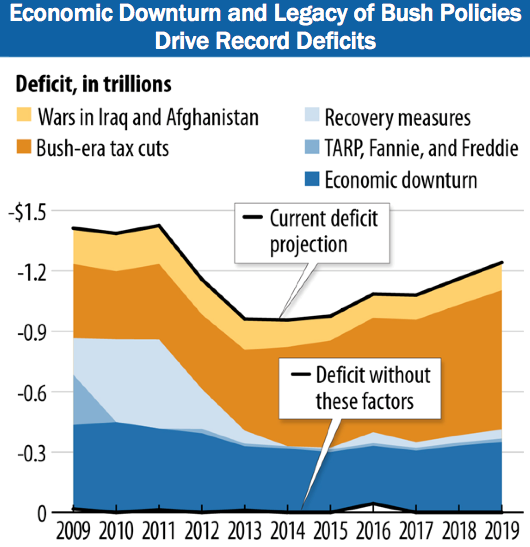
Finally, the graph below gives you a nice breakdown of the current $1.5T deficit. It comes from here:

The US Drawdown & National Debt Debate: AfPak, Korea, etc

Afghanistan rocket

I’ve been thinking a lot recently about the scale of US commitments and how to reduce them so as to not bankrupt the US in the medium-term. I have gotten a fair amount of criticism that I don’t know what I am talking about, US warfighters are superlative, US forces in various places like Korea or Afghanistan augment US national security, pull-outs jeopardize our credibility, etc. Ok. I am learning like the rest of us on this. I agree that US commitments are sticky, and I have little doubt that US servicemen are professional enough to win conflicts in places like Korea and AfPak (Afghanistan & Pakistan), so long as we have the resources to stay.

Further, I will admit that a ‘post-American’ world is a little unnerving. I say this not as an American who likes ‘empire’ (I don’t), but more generally because I still do think, even post-Iraq, that US involvement generally makes the world a better place. The dollar and US engagement help keep the world economy open, and US force can sometimes be the last line against truly awful acts that shame the conscience. This is why I supported the Libya intervention, and this is why I hope the US can keep forces in Korea. A retrenched, bankrupted, and sullen America worries more than just Americans. To clarify to my critics, my concern is whether the US can support allies around the world, not if it should. I don’t want US Forces in Korea (USFK) to leave any more than anyone else. I can think of few more valuable uses of US force than to help defend a democracy against the last worst stalinist despotism on earth. I just wonder whether we can afford it.

I think we need to be a lot more honest about the huge defense cuts that will be required to balance the US budget. The US deficit ($1.5 trillion) is a staggering 10% of GDP and 35% of the budget; publicly-debt ($9T) is at 60% of US GDP ($15T); and the integrated national security budget (DoD, Veterans, relevant parts of Homeland Security and Energy) exceeds $1T. You hardly need to be an economist to think that this is unsustainable and smacks of imperial overstretch. For an expert run-down on the US budget mess, try here.

This gap could of course be filled with tax increases, but a central GOP policy commitment since roughly the Ford administration has been ‘no new taxes.’ Unless this changes dramatically – and the recent Ryan budget proposal showed no GOP movement on tax increases – this means that most of the $1.5T hole must be filled with spending cuts. My own sense is that allowing the Bush 2001 and 2003 tax cuts to sunset, as is current statute, plus tax reform and a carbon tax, could in fact generate a lot of new revenue at tolerable and intelligent levels of pain. This would reduce some of the pressure to cut defense (and all other US government programming). But without such new taxes, the $1.5T hole calls for huge cuts, and the axe would inevitably land on defense too, including US bases and commitments overseas.

I am genuinely agnostic on whether this is a good idea. Part of me thinks that wealthy US allies, especially Japan and Germany, free-ride. They should spend more so that we can spend less. But others have retorted that encouraging wealthy Asian allies like Korea and Japan to spend more could trigger an arms race in Asia that might also go nuclear. Barnett has a nice post on how Asian elites are aware of this and worry about a weak US. (On the other hand, there is not actually a lot of empirical evidence that denuclearization brings peace.)

In response to my commenters at Busan Haps on a US withdrawal from Korea, I wrote:

“America’s economic problems will likely compel the rebalancing all of you are thinking about. Importantly, even if the US wanted to stay and provide ‘extended deterrence’ as we have for 60 years, the dollars are not there for it.

Whether or not we should go is a different question. My sense is that Korea does actually try harder than many US allies. Korea spends 2.7% of GDP on defense. Germany and Japan spend around just 1%. The US spends close to 6%. But like Germany and Japan, Korea is now wealthy enough to spend a lot more. This raises the free-riding question you all worry about.

If Korea really wants USFK to stay no matter what, then the most likely way is for Korea to pay for ALL of the expense of USFK here. Right Korea and the US split the bill roughly so far as I can tell.

But I find great resistance to this thinking. My sense is that within the Beltway, there is strong elite consensus for the US remain committed around the world. ‘Empire’ seems to be a knack or a habit Americans have grown into. We like being a globally present superpower but are increasingly unable to afford it and unwilling to pay the taxes for it.

The question then is what do we do now? Cut entitlements (Medicare, Medicaid, Social Security) to make room for defense? Do we raise taxes enormously for all these things? Are do we retrench from our global posture so we spend less money?

Finally, there is a model for retrenchment. Britain slowly retreated from its empire in the 1950s and 60s. In some places it went very badly – South Asia and southern Africa especially. But this slowly brought British commitments back into line with British resources. The alternative for the US is to change nothing and risk an imperial crack-up – something like the USSR in 1989 or Austro-Hungary in 1914. That is my worry.”

Here are two good recent articles from the Wall Street Journal by Leslie Gelb and Max Boot on whether or not we can drawdown from Afghanistan and Pakistan (AfPak) post-bin Laden. I lean toward Gelb, but I think Boot makes some good points. Particularly, Boot notes that a US presence in Afghanistan made it possible to get OBL, because US forces were proximate. But Boot still sidesteps the debt issue. Both Beinart and the US JSC chairman call the debt the biggest threat to US national security. I am inclined to agree…

Why Nuclear Deterrence Doesn’t Matter that Much in Korea

nuclear-explosion

Last week we had a good speaker at PNU on US extended deterrence in Korea. Much of the discussion focused on nuclear weapons. NK has them obviously, and speculation on NK capabilities is endless. So not surprisingly, SKs are increasingly thinking that they should have them too. While it seems straight-forward to say the North has them, therefore the South should have them too, I think this is inaccurate– and not because America doesn’t want SK to have nukes. Koreans bristle at this, as many states in the world do, because they feel that the Non-Proliferation Treaty (NPT) constitutes nuclear discrimination: the haves (including the US) get to keep their nukes while the have-nots stay de-nuclear on the vague promise that the haves will build down to zero. Needless to say, the NPT haves have done little on this, leading to regular cries of hypocrisy (although Obama seems to genuinely want ‘global zero’). So last decade, India openly decried this logic and went nuclear despite the nuclear haves’ resistance.

But nuclear weapons for SK would not actually serve SK security much regarding NK, because any nuclear use by NK on SK would immediately trigger a SK invasion of the North. It is hard to imagine SK absorbing a nuclear strike without this finally forcing Seoul’s hand to invade NK and end the long stalemate. A nuclear strike would be so devastating that no other possible retaliation – airstikes, port-mining, more sanctions, etc – would be countenanced. An invasion is practically a 100% probability in response to a NK first-strike on the south. While the initial reason for the retaliation would be to suppress NK nuclear capabilities and force regime change, in reality it would quickly to turn into a war of national unification – a second Korean war to finally close the rift. Every analyst I’ve ever heard or read thinks that SK would win such a war – even without US, Japanese, or UN help. It would be a harder slog alone of course, but it is still quite likely.

So, after the SK victory, SK would then be stuck rebuilding NK, including cleaning-up blast zones in the NK from the US or South’s own nuclear strikes. As such, SK is unlikely to ever launch in the first place. There is no point in creating mass devastation one must fix a short time later. More formally stated, a SK second-strike is irrelevant, because a NK first-strike would change SK’s preferences toward from defense and deterrence to irredentism. A NK first-strike would end SK hesitation and confusion on NK and push it openly toward intra-Korean ‘imperialism,’ i.e., irredentism and unity.

Note the difference between N and SK, and the US and USSR. Neither the US nor the USSR had any compunction about nuking each other’s homeland, because neither expected to bear the clean-up costs. The same might be argued for the Indo-Pakistani nuclear competition today. But Korea is different. SK would not nuke NK in response to a first-strike and then just walk away. A NK first-strike – given the special ‘divided nation’ status of the peninsula – would push SK into the long-awaited, much-speculated-upon Second Korean War. And this time there would be a pretty clear winner who would then have to pay for all the reconstruction. So it would be better to have, say, 5 blast-zones in the south, than another 5 in the north too.

The only possible alternative I can see to this is SK nuclear use on the North if SK was actually losing the unification war. If NK launched a first-strike that devastated multiple SK cities and threw the military into disarray, then SK might consider a ‘counter-force’ nuclear strike on the NK People’s Army in order to slow them down and buy the Southern military time to re-organize and win the war. NATO considered similar such counter-force strikes during the Cold War. If the Red Army was rolling through Western Europe on the way to victory, NATO reserved the right to ‘first-use’ against military assets to stem the Soviet tide. But even these strikes would be very limited in Korea – likely low-yield battlefield nuclear weapons. The idea of nuking NK cities – ‘counter-value’ city-busting – is likely off the table due to the massive reconstruction costs that Seoul would have to carry for such strikes a short time later.

Beyond that SK nuclear weapons might be construed against China, Russia, and Japan – the first two of whom are nuclear. De Gaulle famously said French nukes pointed ‘360 degrees.’ And the initial aim of the French nuclear program was as much Germany as the Soviet Union. After three German invasions in 70 years, the French military wanted the ultimate guarantee of French sovereignty that nuclear weapons would give. SK might think the same way regarding Japan, the former colonizer (a surprising number of Koreans still think Japan has imperial designs on Korea). And of course, SK lives next the Chinese goliath. Should the US alliance with Korea crumble, SK might seek nukes to hedge China.

But little of this is discussed in the Korean media, where most of the nuclear discussion focuses on NK. But I just can’t see SK actually nuking NK.

Thoughts on Bin Laden’s Death: Can/Should We Wrap the ‘GWoT’?

obl%203

Amid the flood of commentary, I would recommend this and this.

It’s hard not to be thrilled at this moment. I am not especially nationalistic, but Osama bin Laden (OBL) was doubtless an enemy of liberal democracy, a homicide, and virulently anti-American. Like Obama said, the world is a better place without him, and certainly America, the West, and liberals everywhere are safer. If there is a liberal democratic ‘end of history,’ this was a step on that path. So here a few thoughts:

1. Did we assassinate him? Did we intend to kill him, or just capture him? When I  first saw the CNN story, a by-line in the scroll at the bottom of the screen quoted an unnamed spokesmen saying the goal was to kill him, not capture him. If he really was unarmed, was this then an execution, a murder (!)? What if he had put his hands up? Would the US government or Obama be liable (!)? Honestly, these are just academic question though. No one really wants to ask them, Arabs and Muslims included, and probably not even the Pakistanis. Everyone, Middle Easterners included, is just glad he’s gone. As Walt notes (last link), the rules of engagement on the raid were probably pretty loose, because no one really wanted him captured. Ideally, that would have been best and most humane, but his capture would open up so many problems, that practically, killing him was the most attractive option. If we had him, what would we do with him? Send him to Guantanamo? Torture him? (Imagine how the pro-waterboarding crowd would have responded.) Do we send him to NYC for a trial, or a military tribunal? If he did get a trial, imagine the OJ-style feeding frenzy and his use of it as a platform to capture global attention once again. Given how much trouble we have had structuring a legal architecture for the global war on terror (GWoT), even after 10 years of conflict, the legal issues would have bedeviled the country for years. In fact, if we would have tortured him the way we tortured Khalid Sheik Mohammed (waterboarded 183 times in one month), and then executed him (like Timothy McVeigh), it may in fact have been more humane to kill him during the raid.

2. If we did assassinate him, then can/should we do the same to Gadaffi? I find it ironic that at the same time we killed OBL in a targeted strike, NATO argued that it was not purposefully targeting Gaddafi. It seems very likely that Gaddaffi’s death would end the Libyan war at a stroke, saving countless lives. Assassinations however are a violation of US law.

3. Is it right/wrong to be ‘happy’ that OBL is dead? It feels terribly macabre to wish for someone else’ death, and notably, both Obama and Secretary used the oblique ‘brought him to justice’ in order to avoid saying something like ‘we are glad we shot him in the head.’ (Go here for that ‘Rot in Hell!’ headline.) But OBL is one of those figures like Hitler or Pol Pot who have such a history of unrepentant and continuing awfulness that the moral calculus likely changes. If OBL were the prodigal son and legitimately changed his ways, perhaps we should feel differently. But even after 9/11, he didn’t stop. At some point, even the most Christian/Buddhist/pacifist/Amish/liberal whatever could agree that ethics would be served by his death. Because he so obviously planned to keep on killing on a huge scale, killing him undoubtedly saves lives. This alters the moral discussion, I think. My Korean students and friends seemed a little unnerved that I was pleased. But I mentioned the obvious parallel of Kim Jong Il. He too is one of the figures with such an awful and continuing record that just about everyone believes Korea will be a better place without him. And indeed, SK has flirted in the past with trying to kill his (equally awful) father. When unification comes, if there is war or large-scale violence, it is hard to imagine the SK government wouldn’t also be thinking it would just be easier if Kim and his top cronies die in a firefight. (More likely though is a Mussolini/Ceausescu-style ending where is he is lynched by enrage locals.)

4. Was Pakistan sheltering OBL? Did we connive with western-leaning elements of Pakistan against islamist-leaning ISI elements? No one wants to say this, but it seems increasingly unlikely that OBL survived in a reasonably comfortable home (not in the cave we all thought) in the middle of the country without substantial informal tolerance. Others know far better than me on this point, but this is yet another marker that we should probably be slowly getting out of South Asia.

5. How important is this? W famously said he doesn’t worry to much about OBL anymore. That was probably the right attitude actually, although W was pilloried by the Democrats for saying so. OBL was isolated – the house in Pakistan had no phones or internet to prevent tracking, and his communication with the world went through just a few couriers. So he really was not in operational command of anything anymore. Has the jihad and GWoT moved on? Probably, as Bush said. So yes, OBL’s death was a necessary conclusion to the long post-9/11 story. But it doesn’t actually change too much in the larger GWoT; if anything, maybe we can take it as an opportunity to declare victory and get out of South Asia (see below).

6. Congrats to the US intel services for a job well-done. I haven’t always been too congratulatory of the US conduct of the GWoT, but this was clearly a big breakthrough that richly deserves praise, as does Obama. The headlines about US power are that we are in decline, and that is true, relatively. We are wildly overstretched and need to start coming home. But this is an important marker that we can still be effectively, coherent and focused, in contradistinction to our image from Iraq. This was clearly planned and efforted for many months with lots of details thought out in advance. After the mess we made in Iraq and Afghanistan, this was a good demonstration of the way we can struggle against terrorism without a GWoT. Success doesn’t require massive invasions and the inevitable blunt tactics that come with them. I hope this stands as a future model of US force, along with our moderate efforts in Libya, and not more Iraqs and Afghanistans.

7. What is the Muslim world’s view? I saw Feisal Abdul Rauf (the guy who wants to build the World Trade Center mosque) on CNN. I was disappointed that he couldn’t seem to admit on TV that OBL was bad for solely killing Americans or non-Muslims. He had to say ‘we’ (Muslims) also suffered at his hands. This is true and makes it political easier to ‘sell’ in the Middle East. But he still should have said that OBL deserved justice solely for 9/11 on its own terms. Given that he has proclaimed the WTC mosque to serve ‘inter-faith outreach’ and all that, his automatic tribal instincts at such an important moment disappoint.

8. Will this finally push apart the Taliban and al Qaeda? Can this help us get out of South Asia? Yglesias suggests we can ‘declare victory in the GWoT’ and start to wind down? I am mixed on this. We really need to, but it is not yet clear how much this will set back al Qaeda. Is Zawahiri, who is just as homicidal and fanatical, going to step in keep al Q rolling along? But it does make sense to pivot from a war-fighting to a management strategy at some point. (By management, I mean seeing terrorism like a ‘regular’ social problem akin to crime, piracy, or drugs – limiting the massive use of resources and force, because ‘victory’ is impossible without doing more harm than good.) We will never kill all terrorists globally. That would be far too difficult, would turn into US global imperialism for decades, will bankrupt the country, and destroy our liberal values. As Lithwick notes, the unending GWoT is perverting our sense of justice and liberal values (torture, warrantless wiretaps, indefinite detentions, and so so). As the Framers and republicans everywhere since Cicero have noted, unending war is terrible for democracy and liberalism. So maybe this is the long-needed juncture so that we can finally move on.

US Alliance Commitment to Korea in the Age of Austerity: Big Cuts Loom

csis

So this week my university hosted a forum on the Korean-American alliance with Ralph Cossa and others from the Center for Strategic and International Studies. CSIS is the kind of center that anyone reading this blog would find useful, and Cossa is a great Asia hand. (For starters, try his chapter in this.)

The forum was informative, but too much of it passed what seems to me the growing mismatch between US alliance commitments around the world and US capabilities to meet them, what Paul Kennedy famously called ‘imperial overstretch.’ Most of the speakers reaffirmed the US commitment in direct, unambiguous terms – an expected response given NK’s exceptionally bad behavior last year. But to my mind analysts need to be more forthright admitting the great trouble the US will likely have defending Korea.

I have written on this before; consider the following data points of US ‘partial abandonment’ of SK:

1. US Forces in Korea (USFK) are now just 28,500 servicemen, the smallest number they have been in the history of the force. A large minority, so far as I can tell, are air and naval staff, not infantry. In short, the ground war – the hard, brutal slog of 1950-53 – will be born mostly by the SK army this time.

2. US tactical nuclear weapons were removed from Korea 20 years ago, after the Cold War. Given NK’s nuclear program, ROK elites have been hinting for the last few years that they might like to see them come back or at least discuss it. The US has rejected this.

3. The Combined Forces Command (CFC) is still scheduled to be abolished. CFC places wartime authority in Korea over both US and Korean forces in the hands of a US general. This is widely viewed in Korea as a signal of US commitment to SK defense. Originally it was to be abolished in 2012. Abolition has been moved to 2015, because of recent NK behavior, but CFC is still scheduled to go. The Koreans too have made noises about retaining this, but the US has held firm that it too will go.

4. US public opinion surveys from the Chicago Council of Global Affairs (2008, 2010) only find the 40-45% of American actually want to fight in SK if a war comes: “Americans also show an inclination to take a hands-off approach to confrontations between North and South Korea.” This should not surprise anyone, given the American exhaustion from the war on terror. Consider the Libya intervention (which I supported, to be transparent). This was mostly an inside-the-Beltway affairs (the ‘professor’s war’); US public opinion support for it is tepid. As a result, US involvement is very light. Obama is badly constrained by huge US public reticence to fight yet another big war – which is most certainly what a Korean conflict would be. Libya is far more likely to be the US model in Korea should another war break-out here, rather than a re-run of what happened 60 years ago.

5. USFK is being relocated away from the demilitarized zone to a city south of Seoul – Pyeongtaek. This strikes me as a critical data point, and one that Koreans most definitely worry about. Seoul is the obvious target in any serious war, so USFK’s placement between the KPA (NK People’s Army) and our ally’s capital signaled strong American commitment to SK, both reassuring SK and deterring NK. USFK, even when it was larger, was never enough to stop the 1.2 million-man KPA on the ground. Its role was basically a symbolic trip-wire. That is by stationing US forces in the likely combat zone, any combat would immediately pull in US soldiers, and likely result in battlefield casualties as well. Any US fatalities would have a catalytic effect on US public opinion regarding participation in an otherwise unwanted war. Emotionally provocative images of dead American servicemen would enrage America pubic opinion and so reinforce the US commitment to fight. The trip-wire ensured that the US would be ‘chain-ganged’ into any war in a ‘country far away about which we know little.’ People find this morally objectionable – and it is  – but that does not make it inaccurate.  Indeed NATO did the same during the Cold War. Multinational units were stationed along the West German border with East Germany and Czechoslovakia. If the Red Army crossed the line, initial casualties would be spread around the alliance in order to insure that all allies would have skin in the game. This would help ensure that allies in NATO’s backyard would stick to their commitment to fight. While I doubt that USFK planners are so callous as to open reason this way, it is clearly the case that US forces south of Seoul reduce American exposure, eliminate the immediate trip-wire/chain-gang effect, and give the White House ‘wiggle room’ it did not have before.

6. But even if all of the above were irrelevant, the real elephant in the room that casts doubt on all US alliance commitments (not just Korea) is the crushing national deficit and debt. The US is now borrowing $1.5 trillion per annum. This is the largest peacetime borrowing in US history (and only matched once – in WWII). It represents a staggering 10% of GDP. America’s publicly-held debt is now $9 trillion. These budget constraints will place major limits on any US use of force in the future. Again, the current Libya campaign should be seen as a model for what US war in the age of austerity will look like – hesitation, buck-passing to allies and international organizations, ‘leading from behind,’ no ‘boots on the ground,’ cost-efficient airpower, etc. The only way to close that massive $1.5T gap is to either cut spending or raise taxes (or inflate it away, I suppose – but who wants a re-run of the 1970s?). So long as the GOP remains firmly opposed to tax hikes, then spending must be cut. And no really believes $1.5T in cuts can be found without huge defense cuts. Social Security, Medicare, Medicaid (together: SS/M/M), Defense, plus interest on the debt, compose 80% of the budget. Interest payments cannot be cut obviously; we can’t just unilaterally stiff $9T of bondholders. Nor is there much saving to be found in the remaining 20% of ‘discretionary spending.’ That leaves just the ‘big four,’ as the Simpson-Bowles deficit reduction commission called them: Defense and SS/M/M. This is an absolutely classic example of the guns-vs-butter trade off. We can have a big defense budget or big entitlements (SS, Medicare, Medicaid), but we can’t have both. Consider that the entire US national security budget (Defense, Veterans Affairs, and the relevant parts of the Homeland Security and Energy Departments) costs about $1T. That means you could cut all US national security spending and still not balance the budget. Indeed, half a trillion dollars in deficit spending would still be left over. Just 5 or 6 years ago, when the Bush administration was running 4-500 billion dollar budget deficits, people fretted that such numbers were enormous. Now that would be progress. This budgetary mathematic all but mandates major US retrenchment, unless Americans are willing to dramatically lessen their entitlement expectations to make room for defense. And to no one’s surprise except the hawks I suppose, Americans do actually favor major defense cuts in order to save SS/M/M. Americans, if they must choose, want checks for grandma more than they want aircraft carriers. This is why Michael Mullen, the US Joint Chiefs of Staff Chairman, argued recently that the US budget deficit is now the single biggest threat to US national security. And the Sustainable Defense Task Force, organized by several members of Congress, does in fact recommend US cuts in Korea. (Read Kaplan at Slate.com for superb analysis on the approaching critical mass regarding defense spending.) The likelihood of major cuts in places where American really don’t want to be (Iraq, Afghanistan, Pakistan, Libya) and places American believe can afford their own defense (Western Europe, Japan, Korea) means that it is very likely that US forces will not be in these places in, say, 10-15 years. The money just isn’t there anymore…

In short, America’s accelerating sovereign debt crisis, much reduced force structure in Korea, and low public opinion support for more interventions, badly constrain our ability to meet our alliance commitments here, and many other places. This doesn’t mean we should get out; this is no personal endorsement one way or the other. But it does mean that probability of major US assistance on which Korea has built its security for two generations is diminishing fast. We need to be honest about that. Call it the end of empire, retrenchment, imperial overstretch, whatever; but US allies need to recognize this. The days of free-riding are just about over.